
Note: This content has been moved to our archives and is no longer being updated. To ensure you have the most accurate and relevant experience, we have retired this post as it may contain outdated information, statistics, or references. We recommend checking our latest posts for the most current details.
3 Best And Most Affordable Beach Destinations In The World
Lee Harrison
Why were Lief and I drawn to Panama in the first place… more than 25 years ago… and how have we come to be more invested, personally and professionally, in this isthmus than we are anywhere else in the world?
All Panama but especially Panama City has been one of the greatest economic success stories of the past two decades. The massive growth has been due largely to foreign investment.
When the United States handed over ownership of the Panama Canal to Panama in 1999, the country fell immediately into recession. It needed to find a way to replace the disposable income that all those U.S. GIs had been spreading around and quick.
Panama looked next-door to Costa Rica, whose economy is based almost entirely on income from foreign tourists and resident retirees. We could do that, too, Panamanians figured, and began working in earnest to attract the attention of North Americans.
Panama targeted eco-tourists and budget-conscious Baby Boomers looking for places where they could stretch their retirement nest eggs. It introduced a pensionado residency program, improving on the model Costa Rica made famous, offering resident retirees discounts on everything from restaurant tabs and movie tickets to plane fares and prescription medications.
Coupled with its developed international banking and financial services industries, the canal economy has helped to position Panama as a regional safe haven.
We first recommended Panama as a buy in 1998, and we are more bullish on this country’s prospects today than ever.
Its undervalued property markets put Panama on our radar back in 1998, and, in the nearly two-and-a-half decades since, we have made a series of real estate investments here, from a pre-construction rental, a Casco Viejo renovation, and a commercial building (that houses our Panama-based staff) in the capital city to teak, timber, and fruit plantations in the interior and Los Islotes on the country’s Pacific coast, the biggest and longest-term property undertaking of our careers.
In 2008, we doubled down, choosing Panama as the place to base our Live And Invest Overseas business.
That meant moving to the country full-time… which meant enrolling our son in school and committing in the most personal ways.
The government is pro-business and foreigner-friendly, meaning outsized incentives for foreign retirees and investors, and the country offers more than a dozen visa options (including the Friendly Nations visa that grants work permits), making it easy to become a full-time resident if that’s something you’d like to do.
In the current context, Panama stands out perhaps more than ever as a top choice for property investment. Key local developers here have long track records spanning decades, meaning you can feel confident when buying, and, right now they’re more open to flexible and creative financing rates and plans than they have been in a long time.
That, dear reader, is why Lief and I targeted Panama all those years ago…
And why we continue to invest our time and money here today all these years later.
Until next time,

Kathleen Peddicord
Founding Publisher, Overseas Opportunity Letter
Seeing Beyond Property Prices
We all know that price isn’t everything. In fact, the returns you can earn from a property don’t have much to do with the price. I’ve seen expensive properties produce huge returns, and cheap properties perform poorly.
But for most of us, price is indeed important for diversity’s sake.
If you have, say, $500,000 to invest abroad, you can buy a luxury penthouse in a single city… or perhaps four properties in different countries, with different currencies. As a diversified investor, this makes a lot of sense.
Seeing Beyond Property Prices
If you’re looking for a place for full or part-time living abroad, then price may well be your most important property factor. The price, view, cost of living, amenities, and the weather may be all you need to care about.
Investors, however, will need to consider occupancies, rental demographics, liquidity, and a host of other factors—in addition to price—before making a final decision. Either way, it’s reassuring to know that there’s a world of smart beach options to pick from.
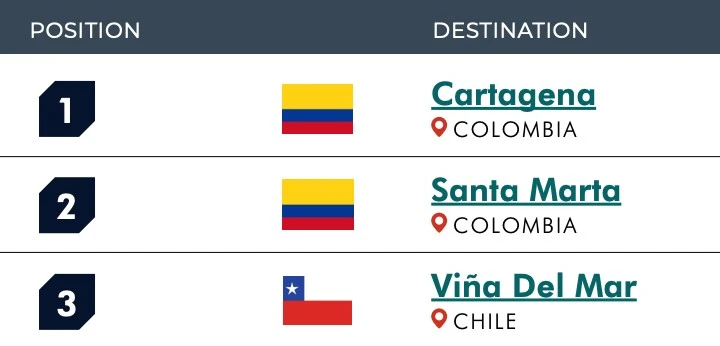 Why Care About The World’s Cheapest Beachfront?
We all know that price isn’t everything. In fact, the returns you can earn from a property don’t have much to do with the price. I’ve seen expensive properties produce huge returns, and cheap properties perform poorly.
But for most of us, price is indeed important for diversity’s sake.
If you have, say, $500,000 to invest abroad, you can buy a luxury penthouse in a single city… or perhaps four properties in different countries, with different currencies. As a diversified investor, this makes a lot of sense.
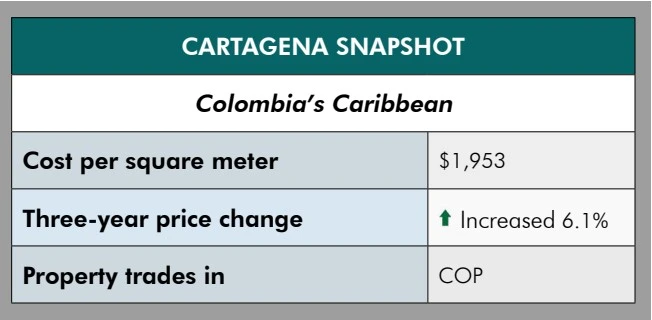
Cartagena is the jewel of Colombia and its best-known tourist destination. The historic center—a UNESCO World Heritage Site—is one of the world’s few remaining walled cities, and it’s in an amazing state of restoration. In fact, it’s probably the nicest Spanish Colonial environment we’ve seen… and we’ve seen plenty.
Aside from the amazing architecture, the walled city offers beautiful plazas, lots of fine dining, and local ethnic cafés that you’ll enjoy exploring. The walled city is the main tourism draw in Cartagena, but the walled city is surrounded by a number of popular beach areas along with a few upcoming historic areas that lie outside the wall.
Santa Marta, Colombia: Inexpensive Properties In One Of The World’s Top Retirement Spots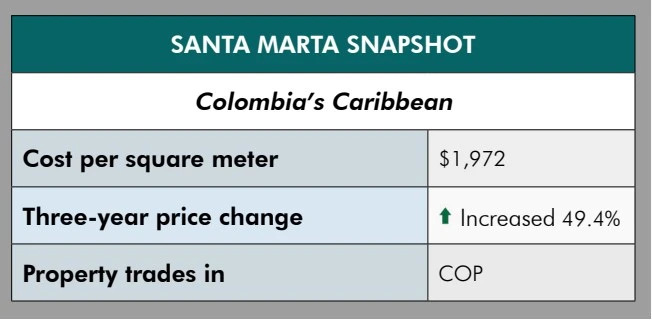
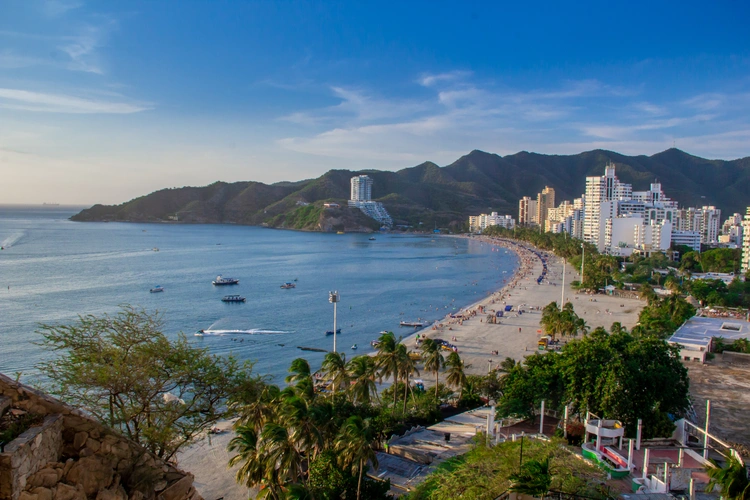
Santa Marta is our preferred beach destination in Colombia… at least for personal use. It’s an intrinsically beautiful Caribbean getaway that conveys a friendly, local feel. It’s a favorite for Colombians, especially families.
The cost of living here is probably the lowest you’ll find anywhere on the Caribbean. And it’s somewhat off the beaten trail, with a fraction of the foreign tourist traffic, expats, or international recognition that nearby Cartagena gets.
By day, Santa Marta offers swimming and sunning, diving, and a low-key, palm-lined boardwalk.
At night, it’s a different story. The waterfront often turns into an impromptu beach party… especially on weekends. Families turn out by the hundreds to enjoy the local music and eat from food trucks.
Viña del Mar, Chile: First-World Beach Properties With Year-Round Pleasant Weather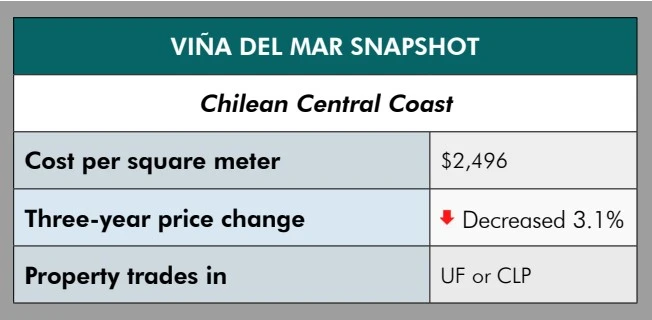
Viña del Mar is one of our favorite seaside resorts, and its advantages start with the moderate weather. There’s plenty of hot weather at this latitude, but the Humboldt Current moderates the temperatures here.
Viña del Mar is the primary coastal attraction and #1 resort in Chile. From the wide, white sand beaches to the luxury hotels, tall oceanfront apartment buildings, and excellent restaurants, it’s all here.
On the practical side, Viña del Mar’s biggest advantage is that it’s in Chile… a true first-world environment, with fast, modern highways, excellent infrastructure, and drinkable water throughout the country. Chile is also one of the safest countries in Latin America, with the region’s lowest homicide rate (2022 data).
Sincerely,

Lee Harrison
Contributor, Global Property Advisor