
Note: This content has been moved to our archives and is no longer being updated. To ensure you have the most accurate and relevant experience, we have retired this post as it may contain outdated information, statistics, or references. We recommend checking our latest posts for the most current details.
Santo Domingo: Dominican Republic’s Colonial Capital
Kat Kalashian
Why were Lief and I drawn to Panama in the first place… more than 25 years ago… and how have we come to be more invested, personally and professionally, in this isthmus than we are anywhere else in the world?
All Panama but especially Panama City has been one of the greatest economic success stories of the past two decades. The massive growth has been due largely to foreign investment.
When the United States handed over ownership of the Panama Canal to Panama in 1999, the country fell immediately into recession. It needed to find a way to replace the disposable income that all those U.S. GIs had been spreading around and quick.
Panama looked next-door to Costa Rica, whose economy is based almost entirely on income from foreign tourists and resident retirees. We could do that, Panamanians figured, and began working in earnest to attract the attention of North Americans.
Panama targeted eco-tourists and budget-conscious Baby Boomers looking for places where they could stretch their retirement nest eggs. It introduced a pensionado residency program, improving on the model Costa Rica made famous, offering resident retirees discounts on everything from restaurant tabs and movie tickets to plane fares and prescription medications.
Coupled with its developed international banking and financial services industries, the canal economy has helped to position Panama as a regional safe haven.
We first recommended Panama as a buy in 1998, and we are more bullish on this country’s prospects today than ever.
Its undervalued property markets put Panama on our radar back in 1998, and, in the nearly two-and-a-half decades since, we have made a series of real estate investments here, from a pre-construction rental, a Casco Viejo renovation, and a commercial building (that houses our Panama-based staff) in the capital city to teak, timber, and fruit plantations in the interior and Los Islotes on the country’s Pacific coast, the biggest and longest-term property undertaking of our careers.
In 2008, we doubled down, choosing Panama as the place to base our Live And Invest Overseas business.
That meant moving to the country full-time… which meant enrolling our son in school and committing in the most personal ways.
The government is pro-business and foreigner-friendly, meaning outsized incentives for foreign retirees and investors, and the country offers more than a dozen visa options (including the Friendly Nations visa that grants work permits), making it easy to become a full-time resident if that’s something you’d like to do.
In the current context, Panama stands out perhaps more than ever as a top choice for property investment. Key local developers here have long track records spanning decades, meaning you can feel confident when buying, and, right now they’re more open to flexible and creative financing rates and plans than they have been in a long time.
That, dear reader, is why Lief and I targeted Panama all those years ago…
And why we continue to invest our time and money here today all these years later.
Until next time,

Kathleen Peddicord
Founding Publisher, Overseas Opportunity Letter
este es el html para procesar:
White-sand beaches, swaying palm trees, warm turquoise water, year-round sunshine—you’ll find them in abundance here in the Dominican Republic… and, of course, pretty much everywhere else in the Caribbean, as well.
What sets the DR apart from other Caribbean islands and nations is its more sophisticated lifestyle—one that is strongly European.
Santo Domingo is a perfect example of this.
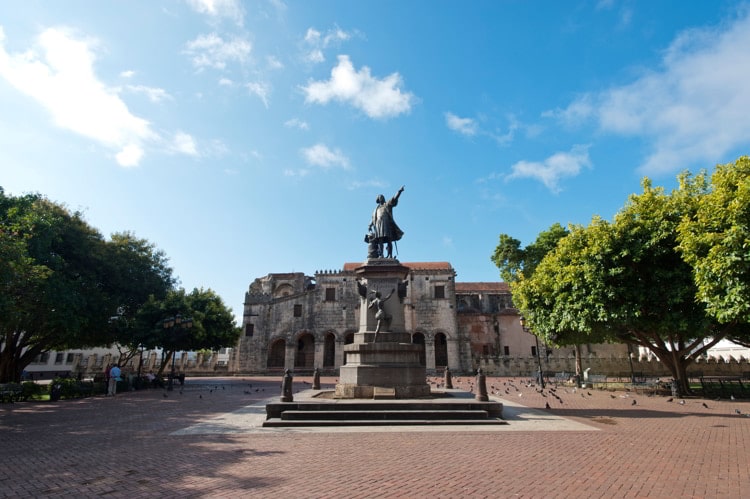
Established in 1492, Santo Domingo predates all other historic, colonial cities in the Caribbean.
It’s the oldest European city in the Americas and the capital of Spain’s first colony in this part of the world. It’s the Caribbean’s only medieval Spanish city and a truly cosmopolitan capital. It has plenty of history and culture, diverse dining options, entertainment, and modern shopping along its cobbled streets. In this capital city, you can enjoy theaters, museums, and stadiums (béisbol is a national obsession).
Founded by Christopher Columbus’ brother Bartholomew, colonial Santo Domingo might best be described as dignified. It feels more genteel than the cities built in other of Spain’s colonies in the decades to follow.
The structures at the heart of this old town are classic Spanish colonial but simpler, statelier, and somehow more refined than their counterparts across the region.
Calle Las Damas, the first street of the original city and therefore the oldest street in all the Americas, is lined with 16th-century pale stone facades and runs into Plaza de España, the expansive open square at the harbor.
The highlight here is the colonial city’s first palace, the private home of the first governor of the colony, Diego Columbus, Christopher’s son. It’s an exceptional example of classic Spanish-colonial architecture.
Diego’s viceregal residence marks one edge of the Plaza de España, at the water. At the square’s other edge, alongside the old town, is a row of restaurants where you can dine al fresco and watch modern-day activity in this harbor that helped build the Americas.
In colonial Santo Domingo, Bartholomew and Diego created an administrative hub for the activities their sponsoring country imagined for the New World they envisioned. It was from this base that the Spanish managed their conquests of Mexico, Puerto Rico, Cuba, Guatemala, Peru, Florida, Colombia, and Jamaica.
In colonial Santo Domingo, the Columbuses built a customs house, a hospital, a cathedral, a university, a library… everything required to launch a new Spain.
During its golden age, this city’s colonial structures stood as testament to the riches flowing through their benefactors’ coffers.
The extensive Zona Colonial, a UNESCO World Heritage site, offers countless Spanish colonial buildings—interesting prospects for both investment and lifestyle—plus, it hasn’t yet become populated with expats like many of the typical colonial city options.
From real estate to the general cost of living, it can be hard to believe you’re in the Caribbean when here. Prices across the board are more Latin American. You could live well in the DR on your monthly Social Security check alone.
There certainly is no lack of entertainment in Santo Domingo, particularly in the Piantini district, which has several good malls, theaters, and fantastic restaurants. For the best sight-seeing, the Colonial Zone is not to be missed. Visiting Parque Colon is something residents never tire of, and you’ll find several galleries and small museums throughout the city.
If you’re looking for upscale activities, Santo Domingo is home to the National Symphony Orchestra of the Dominican Republic (Orquesta Sinfónica Nacional), which hosts many events throughout the year.
Not to be missed is a meal at Pat’e Palo. The eatery was established in 1505 by a retired one-legged, one-eyed pirate and is located across a courtyard from the Columbus family home… it’s a truly unique Dominican experience.
You should also take a jaunt to the Columbus Lighthouse, a fascinating structure said to contain the remains of Columbus. The famous explorer was a voyager even in death; his remains were moved from Spain, to Santo Domingo, to Cuba, and before finally coming back to rest in Spain.
…But in 1877, a lead box with the inscription “Don Christopher Columbus” was found in Santo Domingo, giving rise to speculation that some remains were actually kept in the country. The remains in Spain have been DNA tested and concluded to be Columbus’, but historians agree that some body parts may have been kept in the DR, hence this coffin. Regardless, the coffin and whoever lies inside is on view in the mausoleum, and the structure also houses a museum.
Most of the world knows the Dominican Republic for its white-sand beaches… But, for many, the real appeal of the Dominican Republic is Santo Domingo, the oldest European city in the Americas.
As Kathleen says, “I’ve been hanging out in New World cities that Spain built for a long time.”
“Over the past 35 years, I’ve gotten to know old towns from Granada and León, Nicaragua, and Cuenca, Ecuador, to Old San Juan, Puerto Rico, Antigua, Guatemala, and Casco Viejo, Panama…
“And I appreciate a beautiful beach as much as the next girl…
“But it’s Santo Domingo, as I’ve gotten to know it over the past few years, that has captured my imagination. I appreciate its history, its architecture, and its café culture.”
We’re counting down to the opening of registration for our 2021 Live and Invest in the DR Conference,
And, as always, as a LIOS Confidential reader, you’re eligible for US$50 off the cost of entry.
I’m disappointed to not be headed there in person this year… these annual Live and Invest in The Dominican Republic conferences are such a great excuse to spend time in a Caribbean paradise…
If the DR sounds like it could be your future home overseas, I hope to meet you there in person next year!
Meantime, go here now to get your name on the list to receive first notice and a chance for special additional savings.
Kat Kalashian
Editor, Live and Invest Overseas Confidential